 How many trainees are there in Madagascar?
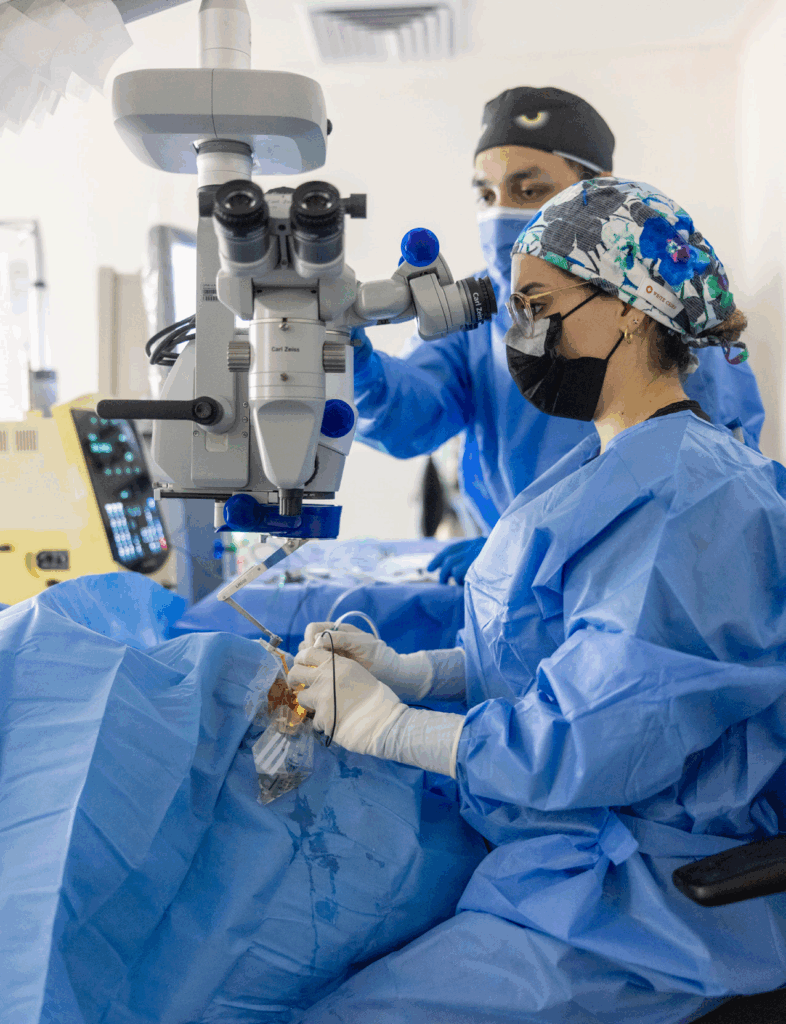
Our three residents are currently undergoing rigorous ophthalmology training alongside our five graduate ophthalmologists who are further training to expand their surgical skills.
What does the program’s pathway look like?
Our residents complete a three–year comprehensive ophthalmology program. However, opportunities for subspecialty training remain extremely limited.
To help close this gap, our clinic supports subspecialty education and is actively expanding its faculty. We are currently arranging for two of our residents to receive subspecialty training—one in retina and the other in glaucoma. In a country with no sub–specialists, the two will be especially valuable.
Similarly, ophthalmologists in the United States typically undergo four years of post–medical school training—one year of general residency, often in family medicine, followed by three years in ophthalmology and an additional 1 to 3 years of fellowship in a subspecialty.
Through our program, we are actively building local capacity for advanced education in ophthalmology, and we aim to equip Malagasy doctors with the skills they need to provide high–quality, specialized eye care within their communities.
How do we recruit eye doctors and surgeons?
At AECS, we are committed to bringing the gift of sight to communities around the world by training local physicians in specialized eye care.
Malagasy-wide, we recruit general practice doctors who are passionate about deepening their skills in life-changing eye surgery and education and serving the community.
Over the past two decades, we have trained 15 surgeons out of our clinic in Antananarivo. As we build a second site in northern Madagascar, we are expanding our search for new resident trainees to help us reach even more patients in need.
How do we find mentor physicians to train our residents?
We recruit mentoring physicians by identifying our global network of ophthalmology professors. Through partnership with U.S. and international medical institutions, we retain a visiting professor for our residents every quarter.
These doctors volunteer their time to guide residents through clinical training, oversee surgeries, and share best practices in eye care delivery.
We also recruit long-term volunteer doctors to live onsite and train residents in Madagascar throughout the academic year. Their sustained physical presence allows for enhanced mentorship, the personalization of each student’s education, and the professional growth of our residents.
What are our goals for the next 5–10 years?
Our primary goal is to mentor eight physicians every year. Within the next five years, we plan to host twelve eye surgeons at our clinic in the capital city of Antananarivo, Madagascar and expand our vital ophthalmology care across the country and beyond.
Meet our dedicated team who make eye care accessible across the globe.
What are the immediate needs for the program?
For the next phase of the training program, we intend to hire a full-time academic advisor who will play a critical role in supporting the continued development of our trainees. This advisor will provide personalized academic guidance, help trainees navigate their learning pathways, and ensure they remain on track to meet their educational goals. By integrating this role into our program, we aim to enhance the overall learning experience and promote long-term success for each participant.
Ideally, every trainee would have an opportunity to train for at least 3 to 6 months at another global institution. This helps ensure that the training at our institution does not become stagnant, but brings other skills, viewpoints, and special training to keep our training fresh and up-to-date. Of course, devices such as cellphones, projectors, examination equipment, and educational materials are also necessary to assist in training.